Beyond the Spreadsheet: How to Audit a Neighborhood for Everyday Wonder
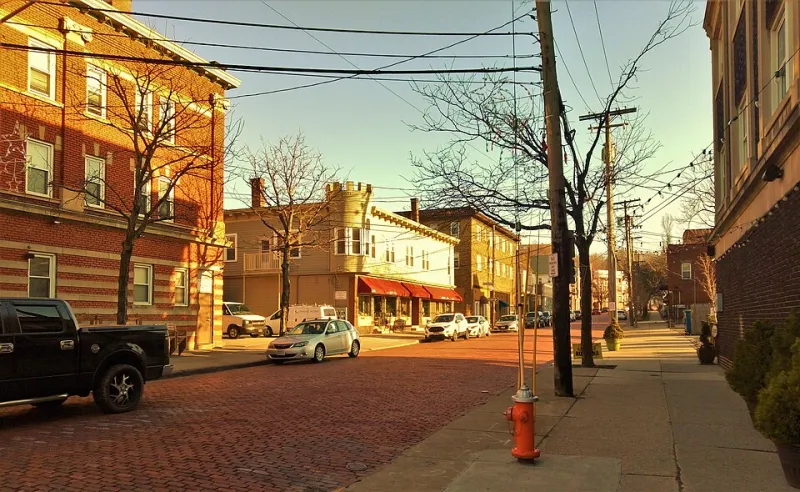
Photo: Westmoon26, CC BY-SA 4.0, via Wikimedia Commons
There is a moment in every home search when the spreadsheet stops helping. You have compared commute times, tax rates, bedroom counts, and the distance to the nearest grocery store. The numbers say yes. Then you pull up to the curb, step out of the car, and something in your chest says... hmm.
That hmm is worth listening to. Call it the awe factor: the collection of small, hard-to-quantify qualities that make a neighborhood feel like yours. It is not magic. It is light, sound, walkability, third places, and the daily rituals you can picture yourself joining. And you can score it before you make an offer.
Why the spreadsheet misses
A spreadsheet can tell you that a house is 1.2 miles from a coffee shop. It cannot tell you whether the walk there feels safe, shady, and pleasant, or whether you will be dodging traffic on a shoulderless road. It can tell you the square footage of the park. It cannot tell you whether anyone actually uses it.
Those details are not fluffy. They are the texture of daily life. If you buy a house and hate the way the neighborhood sounds at night, no amount of quartz countertop will fix it.
The five senses of a neighborhood
Light
Visit at golden hour. Notice where the sun lands. Are there trees that shade the sidewalk in summer? Do streetlights make the block feel warm or harsh? Does the house you are considering get morning light in the kitchen, or is it a cave until noon? Light is one of the few things you cannot renovate into a property.
Sound
Stand still for two full minutes. What do you hear? Traffic, trains, leaf blowers, dogs, kids, music, nothing? Sound changes by time of day. A quiet street at 2 p.m. can become a parade route at school pickup. Ask yourself whether the soundscape matches the life you want.
Walkability
Walk to the nearest errand. Not drive. Walk. Is there a sidewalk? A crosswalk? A corner store? A library? If the answer is no to all of the above, that is fine, but you should know it before you sign. Walkability is not just about exercise. It is about spontaneous contact with other people.
Third places
Sociologists talk about third places: spots that are not home and not work, where people gather casually. Cafes, parks, barbershops, churches, rec centers, and yes, the local dive bar. Look for places where people linger. A neighborhood with third places feels alive on a Tuesday.
Daily rituals
This is the intangible one. Can you picture your morning? The dog walk, the coffee run, the school drop-off, the evening loop around the block? Do people sit on porches? Are there dog walkers, joggers, and kids on bikes? Rituals are the rhythm of a place, and they are easier to feel than to measure.
The awe audit checklist
On your next visit, give the neighborhood a score from 1 to 5 in each category. Do it at three different times if you can: a weekday morning, a weekday evening, and a weekend afternoon.
- Light: Does the block feel bright, shaded, or gloomy? Score it.
- Sound: Is the noise level comfortable for you? Score it.
- Walkability: Can you run one errand on foot? Score it.
- Third places: Did you see at least one place where people gather? Score it.
- Rituals: Did you see signs of daily life you would enjoy? Score it.
- The edge test: Walk ten minutes in each direction. Does the neighborhood still feel good?
- The return test: Drive home at rush hour. How does the commute feel in real life, not on a map?
A total score is less important than the pattern. If light and walkability are high but sound is low, you have a specific trade-off to consider. If everything scores high except third places, maybe you are fine with that. The point is to notice.
What to do with the score
Use the audit to ask better questions. If the sidewalk disappears two blocks away, ask the city about planned improvements. If a train runs nearby, visit during rush hour. If the park looks empty, come back on a Saturday. If you love the vibe but the house needs work, you have found a trade-off you can live with. If the vibe is wrong but the house is perfect, keep looking.
A dream home is not just a floor plan. It is the life that happens outside the front door. The spreadsheet gets you to the neighborhood. The awe audit tells you whether you should stay.